Both Nirvana and Radiohead have used digital technology to gain promotion and benefit themselves financially. Radiohead are a multi-award winning band from Oxford, UK, their music and marketting is considered experimental, progressive and innovative. Radiohead have created debate and stimulated further industry thought regarding innovative ways to sell albums in a digital age. The 'pay what you want' approach highlighted the importance of the fan-musician relationship to profit.
Radiohead have released 8 albums, their latest being 'King of Limbs', released in February 2011. Before this, they released an album 'In Rainbows' via the 'Pay What You Want' approach.
Lady Gaga released the album 'Born This Way' in 2011, the 5 singles were released over an 8 month period, these were Born This Way, Judas, The Edge of Glory, You and I & Marry The Night. The album topped the charts in 23 countries and the single Born This Way set an iTunes record, selling 1 million copies in 5 days. The album was so successful due to the usage of digital technology.
Lady Gaga embraces technology to form a parasocial relationship with her fans, she has a close relationship with them, built by her heavily promoted ideology of self-acceptance. Gaga used social media based fan interaction to reward fans to continue to buy into the artist. This strategy suggests a two way relationship between the artist to the fans, however, 'parasocial interaction' is a term to describe one sided. Parasocial relationships are ones in which one party knows a great deal about the other, but the other does not. This seems to be required to enable a singer to turn into a pop star.
Gaga writes tweets thanking her fans and she retweets people who compliment her. Marketting experts believe 'Born This Way' makes a third of her cash through social media sites. In March 2012, Gaga launched an invite-only social networking site for her fans, LittleMonsters.com. On the site users can download her music, buy tickets to her concerts, talk with each other and occasionally talk to Lady Gaga herself.
Lady Gaga advertises and sells via the most popular digital music platform of all, iTunes. She pays a tonne of money just to be on the first page. Gaga released a music video for all 5 singles, they are flamboyant and often contain an extended narrative. The themes feature sexuality and outsider art, all of which are available to purchase on iTunes.
Wednesday, 7 May 2014

Wednesday, 16 April 2014
Evaluation
For my production pieces, I created three tour posters that explored the evolution of the Punk Rock genre, for this I produced two traditional punk posters, and one more evolved punk poster. I took this approach to demonstrate the changes in genre conventions from the 1970's to the modern day. I drew influences from my research investigation from the bands The Clash and Blink 182, I also gained visual influences from the band 'Sex Pistols'.
From my research investigation I concluded that early punk was much more rebellious in lyrical content and bands beliefs and behaviors. Bands discussed themes such as anarchy, political and social debates and inequality, where as in modern punk, bands discuss more personal problems such as losing girlfriends, rather than the issues that are relevant to the collective. I aimed to illustrate this through my production work.
For my first piece I produced a tour poster focusing on and projecting original punk, taking influences and visual signifiers from The Clash. I wanted the audience to decode with the preferred reading and decode the band as very rebellious, and 'hardcore'. The imagery used for this tour poster is very traditional, a three man band standing in front of an old dilapidated building with a very dirty door to show their gritty surroundings, a typical convention, discovered in my investigation. The filter used on the image gives it a very gritty grainy effect, used very commonly on Punk posters. I made the image look like it was a piece of paper stuck onto the tour poster with ripped edges, along with the tour date at the bottom, I did this to show the untidiness of the poster, that they don't care about their appearance and that there are more important things to focus on, which was a common Punk ideology during that era. The colour scheme is desaturated and contains a rough texture, however, the text colour at the top is pink, I constructed this as it is the common colour that The Clash use, once again using references from original punk bands. The font at the top of my tour poster isn't the same, I used a mixture of 3 different fonts to write 'Tickets available online now', this makes it look messy and untidy, a constant theme of original punk. These are all Punk signifiers that help connote Punk ideology. One criticism I have of this poster is that one of my band members is wearing a hoodie, this is not a typical punk signifier, which may mislead my audience when decoding.
For my second piece I produced a tour poster based on the Sex Pistols, I wanted an audience to be able to decode the piece as a Sex Pistols influenced punk poster, and I feel as though I have achieved this. The colour scheme is very typical of the Sex Pistols, yellow and pink. The background of my poster is a bright yellow, the font of my text is brown and pink, it gives off a very similar vibe to the Sex Pistols, and I feel my re-creation enabled my audience to decode the poster as Punk. The image I used is a close up of the male singer shouting into a microphone, straight away enabling my audience to see what genre of music this is, it also portrays the singer as very angry and emotional, he may be expressing his thoughts of politics and anarchy through lyrics, commonly expressed in early punk which I found out in my investigation. Even the tour name signifies the audience of the style of music, 'drink tea and die', it shows that Punk is very anti-monarchy, since my poster was based around the Sex Pistols it felt essential to include a reference to monarchy following up their track 'God Save The Queen'.
My third and final piece is completely different, it is based on contemporary modern Pop Punk, and gained influences from Blink 182, to show the differences between the era's and the increased individualistic nature of contemporary punk lyrics, a finding from my investigation. The image used is quite different to the others, once again the text contains a three man band, but for this poster I took 3 separate images and cut them out and stuck them next to each other, they are all cut out very neatly and have had a spot removing tool on their faces, to make them look as good as possible, I did this to show how perfect they all look, and they care about their appearance, my audience would be able to see the difference between this and my other posters and see how punk bands has evolved. Another small icon to emphasise how Punk has turned feminine, on one of the band members shirts is a love heart, this would never be seen on someone like The Clash, this was done intentionally to show how things like that are now acceptable in Punk.
From my research investigation I concluded that early punk was much more rebellious in lyrical content and bands beliefs and behaviors. Bands discussed themes such as anarchy, political and social debates and inequality, where as in modern punk, bands discuss more personal problems such as losing girlfriends, rather than the issues that are relevant to the collective. I aimed to illustrate this through my production work.
For my first piece I produced a tour poster focusing on and projecting original punk, taking influences and visual signifiers from The Clash. I wanted the audience to decode with the preferred reading and decode the band as very rebellious, and 'hardcore'. The imagery used for this tour poster is very traditional, a three man band standing in front of an old dilapidated building with a very dirty door to show their gritty surroundings, a typical convention, discovered in my investigation. The filter used on the image gives it a very gritty grainy effect, used very commonly on Punk posters. I made the image look like it was a piece of paper stuck onto the tour poster with ripped edges, along with the tour date at the bottom, I did this to show the untidiness of the poster, that they don't care about their appearance and that there are more important things to focus on, which was a common Punk ideology during that era. The colour scheme is desaturated and contains a rough texture, however, the text colour at the top is pink, I constructed this as it is the common colour that The Clash use, once again using references from original punk bands. The font at the top of my tour poster isn't the same, I used a mixture of 3 different fonts to write 'Tickets available online now', this makes it look messy and untidy, a constant theme of original punk. These are all Punk signifiers that help connote Punk ideology. One criticism I have of this poster is that one of my band members is wearing a hoodie, this is not a typical punk signifier, which may mislead my audience when decoding.
For my second piece I produced a tour poster based on the Sex Pistols, I wanted an audience to be able to decode the piece as a Sex Pistols influenced punk poster, and I feel as though I have achieved this. The colour scheme is very typical of the Sex Pistols, yellow and pink. The background of my poster is a bright yellow, the font of my text is brown and pink, it gives off a very similar vibe to the Sex Pistols, and I feel my re-creation enabled my audience to decode the poster as Punk. The image I used is a close up of the male singer shouting into a microphone, straight away enabling my audience to see what genre of music this is, it also portrays the singer as very angry and emotional, he may be expressing his thoughts of politics and anarchy through lyrics, commonly expressed in early punk which I found out in my investigation. Even the tour name signifies the audience of the style of music, 'drink tea and die', it shows that Punk is very anti-monarchy, since my poster was based around the Sex Pistols it felt essential to include a reference to monarchy following up their track 'God Save The Queen'.
My third and final piece is completely different, it is based on contemporary modern Pop Punk, and gained influences from Blink 182, to show the differences between the era's and the increased individualistic nature of contemporary punk lyrics, a finding from my investigation. The image used is quite different to the others, once again the text contains a three man band, but for this poster I took 3 separate images and cut them out and stuck them next to each other, they are all cut out very neatly and have had a spot removing tool on their faces, to make them look as good as possible, I did this to show how perfect they all look, and they care about their appearance, my audience would be able to see the difference between this and my other posters and see how punk bands has evolved. Another small icon to emphasise how Punk has turned feminine, on one of the band members shirts is a love heart, this would never be seen on someone like The Clash, this was done intentionally to show how things like that are now acceptable in Punk.
Tuesday, 18 March 2014
Television - Audience Homework
1a. Identify the main targeted audience of Mad Men
Mad Men targets a niche and mainly active audience
1b. Idenfity one way the text has been encoded to appeal to that type of audience
One way in which Mad Men does this is with it's complex female characters
1c. Justify how that point would gratify your previously identified type of audience
The female character Peggie in Mad Men goes against the typical female role, Peggie is independent and gains power through her intelligence, an active audience would notice this and appreciate how Weiner has challenged the typical female stereotype
1d. Describe a narrative sequence where this point is present
This is present during the scene where Peggie confronts Don Draper in his office and tells her she is leaving, this shows independence and dominance, this is emphasised with the usage of a low camera angle when focussing on Peggie, to show she is the current power holder
2. Does lost target a passive audience? Justify your answer
Yes, Lost uses many mainstream conventions which attract a passive audience, for example the use of a score, during scenes such as the final scene in episode 2, the score became more intense and dramatic as Charlie said 'guys, where are we?', a passive audience would simply read this as the JJ. Abrams intended, where as an active audience may find this patronising
3. Identify how Lost is encoded to gratify a passive audience?
Lost gratifies a passive audience with the usage of the dialogue, characters spell things out for the audience, enabling a passive audience to simply watch and enjoy the film, an example of this is when Soya says to Jack 'you're the hero', this is a character role within the Propp theory, if Lost was encoded to gratify a more active audience, then we would be left to figure it out for ourselves, however because Lost targets a more passive audience, it's spelled out for us
4. Justify one point that would force Mad Mens audience to decode the text actively in order to gain gratifications
The lack of a score forces the audience of Mad Men to decode the text actively as the score isn't backing up how certain characters are feeling or how you should feel during the scene, you are left to work things out for yourself and decode the narrative in which ever way you can
5. Explain and justify how Peaky Blinders has been encoded to gratify both a passive and active audience
Peaky Blinders is considered a high brow text in which attracts an active audience, it's usage of good quality cinematography within the first two minutes of episode 2 of a fight between The Peaky Blinders and The Lea Family are certain things an active audience would enjoy watching and would appreciate, however, a passive audience enjoys things such as the usage of a very obvious soundtrack, during exciting scenes, music by The White Stripes is used, during sad scenes the soundtrack becomes much more slow paced and sad, this enables a passive audience to simply watch and enjoy the text and decode it as Steven Knight encoded it
6. Justify the statement 'Lost is encoded to be inclusive'
Lost is encoded to be inclusive with the usage of mainstream character roles such as the character Shannon, she is the typical dumb blonde, we see this during the scene where the polar bear charges to attack and whilst everyone else has ran away, Shannon is still stood there screaming, this typical characters role is very mainstream and attracts a passive audience as it's what they're used to seeing
7. Why does the use of a score appeal to a more passive audience?
The score appeals to a passive audience as it tells them how to feel, during a sad scene a non-diegetic soundtrack/score would start to play, you wouldn't even need to understand the narrative to realise this was a sad moment within the scene, which gratifies a passive audience.
Mad Men targets a niche and mainly active audience
1b. Idenfity one way the text has been encoded to appeal to that type of audience
One way in which Mad Men does this is with it's complex female characters
1c. Justify how that point would gratify your previously identified type of audience
The female character Peggie in Mad Men goes against the typical female role, Peggie is independent and gains power through her intelligence, an active audience would notice this and appreciate how Weiner has challenged the typical female stereotype
1d. Describe a narrative sequence where this point is present
This is present during the scene where Peggie confronts Don Draper in his office and tells her she is leaving, this shows independence and dominance, this is emphasised with the usage of a low camera angle when focussing on Peggie, to show she is the current power holder
2. Does lost target a passive audience? Justify your answer
Yes, Lost uses many mainstream conventions which attract a passive audience, for example the use of a score, during scenes such as the final scene in episode 2, the score became more intense and dramatic as Charlie said 'guys, where are we?', a passive audience would simply read this as the JJ. Abrams intended, where as an active audience may find this patronising
3. Identify how Lost is encoded to gratify a passive audience?
Lost gratifies a passive audience with the usage of the dialogue, characters spell things out for the audience, enabling a passive audience to simply watch and enjoy the film, an example of this is when Soya says to Jack 'you're the hero', this is a character role within the Propp theory, if Lost was encoded to gratify a more active audience, then we would be left to figure it out for ourselves, however because Lost targets a more passive audience, it's spelled out for us
4. Justify one point that would force Mad Mens audience to decode the text actively in order to gain gratifications
The lack of a score forces the audience of Mad Men to decode the text actively as the score isn't backing up how certain characters are feeling or how you should feel during the scene, you are left to work things out for yourself and decode the narrative in which ever way you can
5. Explain and justify how Peaky Blinders has been encoded to gratify both a passive and active audience
Peaky Blinders is considered a high brow text in which attracts an active audience, it's usage of good quality cinematography within the first two minutes of episode 2 of a fight between The Peaky Blinders and The Lea Family are certain things an active audience would enjoy watching and would appreciate, however, a passive audience enjoys things such as the usage of a very obvious soundtrack, during exciting scenes, music by The White Stripes is used, during sad scenes the soundtrack becomes much more slow paced and sad, this enables a passive audience to simply watch and enjoy the text and decode it as Steven Knight encoded it
6. Justify the statement 'Lost is encoded to be inclusive'
Lost is encoded to be inclusive with the usage of mainstream character roles such as the character Shannon, she is the typical dumb blonde, we see this during the scene where the polar bear charges to attack and whilst everyone else has ran away, Shannon is still stood there screaming, this typical characters role is very mainstream and attracts a passive audience as it's what they're used to seeing
7. Why does the use of a score appeal to a more passive audience?
The score appeals to a passive audience as it tells them how to feel, during a sad scene a non-diegetic soundtrack/score would start to play, you wouldn't even need to understand the narrative to realise this was a sad moment within the scene, which gratifies a passive audience.
Monday, 24 February 2014
Discuss the audience appeal of your three main texts
The three texts I shall be discussing are the television series Lost, created by J.J Abrams in 2004, Peaky Blinders, created by Steven Knight in 2013 and Mad Men, created by Matthew Weiner in 2007. Lost is a mainstream text, in which most of it's viewers are passive, the audience simply reads the text as Abrams intended.
Focussing on Series 1, Episode 2, 'The Pilot, Part 2', there are mainstream conventions within the narrative and technical conventions. Within the first minute of the episode I realised this was a mainstream text with the use of a non-linear narrative, the scene starts off with 3 characters walking through a jungle/forest, this sets the scene, however there is then a close up of one of the characters and then a flashback to a clip within the plane, this is a very mainstream narrative convention, attracting a mainstream passive audience.
Another huge mainstream convention used within the episode is the usage of enigma codes. In this episode there are about 5 different enigma codes, all used to keep the viewer interested just before going to a break. One of the first enigma codes we get are with the handcuffs, whilst Walt is wandering through the forest alone we get a point of view shot of him looking around, the score (another mainstream convention) builds tension, and then the handcuffs are brought into the shot, us as an audience straight away wonder what these handcuffs have to do with anything, who's are they, where are they? None of these questions are answered, leaving the audience wanting to know more. The biggest enigma code of them all has to be the very final one during the last scene, Kate, Charlie, Shannon, Boon, Sawyer and Sayid all go on a 'quest' to reach high ground to find signal for the radio, they receive a distress signal which had been playing for 16 years that says 'help, everyone is dead', the camera then cuts from character to character with the score becoming more sinister, it then zooms in on Charly as he says 'guys, where are we?', and then the end of the episode, this is a huge enigma code to enable the passive audience to discuss with others what might happen and to ensure that they watch next episode.
Another way in which Lost is a mainstream text is the usage of an ensemble cast. There are wide range of character roles in this show, different race, age and gender, which all get equal screening time, meaning a wide range of people can watch the show and relate, Blumler and Katz Uses and Gratifications theory would suggest that this show enables the audience to personally identify with the characters.
Now moving onto Mad Men, a very different text in which targets a niche and mostly active audience, it is considered a high brow text, intellectually and culturally rich.
Mad Men is shown on AMC, an american cable and satellite television channel, a very niche channel, which cares not about money but only producing high quality shows, Matthew Weiner, the producer of Mad Men, paid £250,000 to play a minute of the Beatles track 'Tomorrow Never Knows' in an episode, this is one way in which Mad Men is a niche text, with it's very successful placement on AMC.
Another way in which Mad Men is considered a niche text is it's usage of complex female characters. Some of the female characters in this show break the stereotypical female role, focussing on Series 5, Episode 11, 'The Other Woman', Peggy enters Don Drapers office and tells him that she is leaving, she is very dependant, and strong, the usage of a low camera angle on Peggy emphasises this, this breaks the stereotype, however, then you have Joan who is sexualised, she is forced to have sex with the head of Jaguar to ensure that he buys Drapers idea, she is using her body to gain power. But then we have Drapers wife, Meg, who is somewhere in between, she uses her independence to tell her husband that she is following her dreams no matter what, but then goes to an audition in which the producers ignore everything she says and just stare at here body. These complex and wide variety of female character roles draw in a niche active audience.
Peaky Blinders is quite a tough audience to define, it isn't as mainstream and simple as Lost, but it's not as intellectually and culturally rich as Mad Men. Peaky Blinders is a crime drama set in Birmingham which follows former World War one soldiers who have returned home and formed a criminal gang. It is placed on BBC 2, which has a reputation for producing High Brow drama series. Peaky Blinders has a very specific audience, in which most are active, one way in which it attracts it's audience is with it's usage of high quality cinematography. Within the first two minutes of Episode 2 there is a fight scene between The Lea Family and the Peaky Blinders, the scene has no dietetic sound whatsoever, and was editied in slow motion with lots of different unusual camera angles, this was all done to emphasise the scene and get the audience to focus on it more, a passive audience would've merely read the text and enjoyed, however a more active audience really would've appreciated the amount of work that went into that editing and camera work, which is what the director Steven Knights would've hoped to achieve.
Another way in which Peaky Blinders attracted it's audience is by breaking the stereotypical representation of regional identity, in this case the Brummie. Typical representations of the Brummie is that they aren't very smart, and the accent makes them seem very stupid, you see things in magazines such as the Daily Mail that have headlines like 'Brummie Dummie', Peaky Blinders
completely goes against this sterotype and represents Brummies as much more smart and formal.
The score and soundtrack within Peaky Blinders is a very mainstream technical convention, the music often reflects the mood of the scene, during scenes of excitement tracks by The White Stripes are often played, build up of the score is used to build tension, sad scenes the score becomes very sad, this enables the audience to become passive and simply enjoy the text, however, some audiences found this very patronising, almost as if the film was telling us that this scene is now sad, when we clearly already knew this.
Focussing on Series 1, Episode 2, 'The Pilot, Part 2', there are mainstream conventions within the narrative and technical conventions. Within the first minute of the episode I realised this was a mainstream text with the use of a non-linear narrative, the scene starts off with 3 characters walking through a jungle/forest, this sets the scene, however there is then a close up of one of the characters and then a flashback to a clip within the plane, this is a very mainstream narrative convention, attracting a mainstream passive audience.
Another huge mainstream convention used within the episode is the usage of enigma codes. In this episode there are about 5 different enigma codes, all used to keep the viewer interested just before going to a break. One of the first enigma codes we get are with the handcuffs, whilst Walt is wandering through the forest alone we get a point of view shot of him looking around, the score (another mainstream convention) builds tension, and then the handcuffs are brought into the shot, us as an audience straight away wonder what these handcuffs have to do with anything, who's are they, where are they? None of these questions are answered, leaving the audience wanting to know more. The biggest enigma code of them all has to be the very final one during the last scene, Kate, Charlie, Shannon, Boon, Sawyer and Sayid all go on a 'quest' to reach high ground to find signal for the radio, they receive a distress signal which had been playing for 16 years that says 'help, everyone is dead', the camera then cuts from character to character with the score becoming more sinister, it then zooms in on Charly as he says 'guys, where are we?', and then the end of the episode, this is a huge enigma code to enable the passive audience to discuss with others what might happen and to ensure that they watch next episode.
Another way in which Lost is a mainstream text is the usage of an ensemble cast. There are wide range of character roles in this show, different race, age and gender, which all get equal screening time, meaning a wide range of people can watch the show and relate, Blumler and Katz Uses and Gratifications theory would suggest that this show enables the audience to personally identify with the characters.
Now moving onto Mad Men, a very different text in which targets a niche and mostly active audience, it is considered a high brow text, intellectually and culturally rich.
Mad Men is shown on AMC, an american cable and satellite television channel, a very niche channel, which cares not about money but only producing high quality shows, Matthew Weiner, the producer of Mad Men, paid £250,000 to play a minute of the Beatles track 'Tomorrow Never Knows' in an episode, this is one way in which Mad Men is a niche text, with it's very successful placement on AMC.
Another way in which Mad Men is considered a niche text is it's usage of complex female characters. Some of the female characters in this show break the stereotypical female role, focussing on Series 5, Episode 11, 'The Other Woman', Peggy enters Don Drapers office and tells him that she is leaving, she is very dependant, and strong, the usage of a low camera angle on Peggy emphasises this, this breaks the stereotype, however, then you have Joan who is sexualised, she is forced to have sex with the head of Jaguar to ensure that he buys Drapers idea, she is using her body to gain power. But then we have Drapers wife, Meg, who is somewhere in between, she uses her independence to tell her husband that she is following her dreams no matter what, but then goes to an audition in which the producers ignore everything she says and just stare at here body. These complex and wide variety of female character roles draw in a niche active audience.
Peaky Blinders is quite a tough audience to define, it isn't as mainstream and simple as Lost, but it's not as intellectually and culturally rich as Mad Men. Peaky Blinders is a crime drama set in Birmingham which follows former World War one soldiers who have returned home and formed a criminal gang. It is placed on BBC 2, which has a reputation for producing High Brow drama series. Peaky Blinders has a very specific audience, in which most are active, one way in which it attracts it's audience is with it's usage of high quality cinematography. Within the first two minutes of Episode 2 there is a fight scene between The Lea Family and the Peaky Blinders, the scene has no dietetic sound whatsoever, and was editied in slow motion with lots of different unusual camera angles, this was all done to emphasise the scene and get the audience to focus on it more, a passive audience would've merely read the text and enjoyed, however a more active audience really would've appreciated the amount of work that went into that editing and camera work, which is what the director Steven Knights would've hoped to achieve.
Another way in which Peaky Blinders attracted it's audience is by breaking the stereotypical representation of regional identity, in this case the Brummie. Typical representations of the Brummie is that they aren't very smart, and the accent makes them seem very stupid, you see things in magazines such as the Daily Mail that have headlines like 'Brummie Dummie', Peaky Blinders
completely goes against this sterotype and represents Brummies as much more smart and formal.
The score and soundtrack within Peaky Blinders is a very mainstream technical convention, the music often reflects the mood of the scene, during scenes of excitement tracks by The White Stripes are often played, build up of the score is used to build tension, sad scenes the score becomes very sad, this enables the audience to become passive and simply enjoy the text, however, some audiences found this very patronising, almost as if the film was telling us that this scene is now sad, when we clearly already knew this.
Tuesday, 11 February 2014
Study the Uses and Gratifictions theory and question, which gratifications audiences would gain from each of your studied texts.
According to Blumler and Katz, people watch texts to gain something from them, whether that be a use or a gratification, Peaky Blinders fits in to this theory. Within Peaky Blinders is retrophilia, you are constantly given historical content from the time in which it was set, in this case, 1919, in terms of the Uses and Gratifications theory, Peaky Blinders informs it's audience, for example, during the scene where the horse has a broken leg, Tom Shelby and two other men that work in the barn are under the impression the horse has been given a curse by gypsies, this informs the audience of the ideologies of people in Birmingham at that time and gives them a little background information, a passive audience may merely ignore this, however an active audience would take in this information and appreciate that it's there. Peaky Blinders gratifies it's audience with entrainment and escapism, they do this with their usage of highly concentrated cinematography, a number of scenes within Peaky Blinders have been so highly edited and so thought out that they don't seem real, an example of this is the scene where there is a confrontation and fight with the Lea Family, there are a number of different shots and camera angles used within the scene however it's not as face paced as it may seen, it's completely slowed down and there is no diegetic sound whatsoever, only music, this lacks a sense of realism and enables the audience to escape within the text.
Thursday, 6 February 2014
How does Peaky Blinders attract it's audience?
Peaky Blinders is a crime drama set in Birmingham in 1919 which follows former world war one soldiers who have returned home and formed a criminal gang. It is placed on BBC 2, which has a reputation for producing 'High Brow' drama series, intellectually and culturally rich texts.
Peaky Blinders has a very specific audience, in which most are active, one way in which it attracts it's audience is with it's usage of good quality cinematography. Within the first two minutes of Episode 2 there is a fight scene between The Lea Family and the Peaky Blinders, the whole scene consists of no dietetic sound whatsoever, and it was all in slow motion with numerous clips used, this was all done to emphasise the scene and get the audience to look at it more, a passive audience would've merely read the text and enjoyed, however a more active audience really would've appreciated the amount of work that went into that editing and camera work, which is what the director Steven Knights would've hoped to achieve.
Another way in which Peaky Blinders attracted it's audience is by breaking the stereotypical representation of regional identity, in this case the Brummie. Typical representations of the Brummie is that they aren't very smart, and the accent makes them seem very stupid, you see things in magazines such as the Daily Mail that have headlines like 'Brummie Dummie', Peaky Blinders completely goes against this sterotype and represents Brummies as much more smart and formal..
Peaky Blinders has a very specific audience, in which most are active, one way in which it attracts it's audience is with it's usage of good quality cinematography. Within the first two minutes of Episode 2 there is a fight scene between The Lea Family and the Peaky Blinders, the whole scene consists of no dietetic sound whatsoever, and it was all in slow motion with numerous clips used, this was all done to emphasise the scene and get the audience to look at it more, a passive audience would've merely read the text and enjoyed, however a more active audience really would've appreciated the amount of work that went into that editing and camera work, which is what the director Steven Knights would've hoped to achieve.
Another way in which Peaky Blinders attracted it's audience is by breaking the stereotypical representation of regional identity, in this case the Brummie. Typical representations of the Brummie is that they aren't very smart, and the accent makes them seem very stupid, you see things in magazines such as the Daily Mail that have headlines like 'Brummie Dummie', Peaky Blinders completely goes against this sterotype and represents Brummies as much more smart and formal..
Thursday, 30 January 2014
Explore the different ways in which audiences and/or users respond to your chosen texts
AMC's and Matthew Weiners critically acclaimed Mad Men is a niche text targeting an active audience, which is not encoded to gratify a mainstream audience. As Mad Men goes against typical mainstream conventions, the audience has responded in a numerous ways.
The audience of Mad Men have responded via social networking sites, Charlie Collier, the president of AMC mentioned how they brought out a game in which you could go make an avatar based on Mad Men and then share it on a social networking site where others could see their avatars, and of course, the name of the show. There are also other games such as 'the personality test', this enables the audience to connect more with the show and compare themselves with other Mad Men.
The audience of Mad Men have responded via social networking sites, Charlie Collier, the president of AMC mentioned how they brought out a game in which you could go make an avatar based on Mad Men and then share it on a social networking site where others could see their avatars, and of course, the name of the show. There are also other games such as 'the personality test', this enables the audience to connect more with the show and compare themselves with other Mad Men.
Thursday, 23 January 2014
How does Lost attract it's audience
JJ. Abrams Lost attracts a wide, mainstream audience. Lost has been encoded to be inclusive, both active and passive audience can be gratified by it.
The texts usage of mainstream narrative conventions are what bring in such a large audience. First off, Lost is a hybrid, it uses conventions of Action, Fantasy & Adventure. During Kates flashback of the plane crash, there is a usage of fast editing when the plane first starts going down and also the usage of special effects when the back of the plane is ripped off taking some of the passengers with it, these two techniques are very typical of the action drama. Lost also links in with the Adventure and Fantasy genre, as 20 minutes in to the episode, Kate, Charlie, Shannon, Boon, Sawyer and Said go on a 'quest' through the jungle to reach high ground to get signal for the radio, a quest for the characters to complete is often set in the Adventure and Fantasy genre. Abrams decided to make Lost a hybrid text to make sure those who have an oppositional reading of individual genres, aren't unable to watch the show, making the text able to be watched by more people, making it a mainstream text.
The texts usage of mainstream narrative conventions are what bring in such a large audience. First off, Lost is a hybrid, it uses conventions of Action, Fantasy & Adventure. During Kates flashback of the plane crash, there is a usage of fast editing when the plane first starts going down and also the usage of special effects when the back of the plane is ripped off taking some of the passengers with it, these two techniques are very typical of the action drama. Lost also links in with the Adventure and Fantasy genre, as 20 minutes in to the episode, Kate, Charlie, Shannon, Boon, Sawyer and Said go on a 'quest' through the jungle to reach high ground to get signal for the radio, a quest for the characters to complete is often set in the Adventure and Fantasy genre. Abrams decided to make Lost a hybrid text to make sure those who have an oppositional reading of individual genres, aren't unable to watch the show, making the text able to be watched by more people, making it a mainstream text.
Tuesday, 14 January 2014
Lost
The television series Lost is a mainstream text, in which the majority of the audience are passive, they simply watch the show and enjoy. We know this from it's usage of technical conventions and narrative.
The first convention that makes me believe this is a mainstream text is in the first minute of the second episode, a non-linear narrative. We start off by seeing 3 characters walking in the forest, we assume this is where the entire show will be set, however, we then suddenly get a close up of a male character and then a cut to this same character sat on a plane, this is a flashback, which is a very mainstream technical convention.
Another convention that makes me believe this is a mainstream text is the usage of lots of enigma codes. Enigma codes are usually shown just before an advert break to make sure the audience come back for more, this is very commonly used. One or two examples of this are when John Lock and Walt are on the beach, they are both having a friendly chat on the beach discussing an old game, when all of a sudden there is a change in the music score, it becomes much darker, a close up and zoom is then used on John to whom then says 'wanna know a secret?', the clip then changes. Another example of an enigma code is right at the end of the episode, when a group of our characters have gone on a hike, to then find out a loop of 'help me, please save me, it killed them all' being played through a radio transmission for 16 years, the score then once again reflects the mood and Charly says 'Guys, where are we?', it then cuts to the end of the episode.
Another convention which adheres to the mainstream is
The first convention that makes me believe this is a mainstream text is in the first minute of the second episode, a non-linear narrative. We start off by seeing 3 characters walking in the forest, we assume this is where the entire show will be set, however, we then suddenly get a close up of a male character and then a cut to this same character sat on a plane, this is a flashback, which is a very mainstream technical convention.
Another convention that makes me believe this is a mainstream text is the usage of lots of enigma codes. Enigma codes are usually shown just before an advert break to make sure the audience come back for more, this is very commonly used. One or two examples of this are when John Lock and Walt are on the beach, they are both having a friendly chat on the beach discussing an old game, when all of a sudden there is a change in the music score, it becomes much darker, a close up and zoom is then used on John to whom then says 'wanna know a secret?', the clip then changes. Another example of an enigma code is right at the end of the episode, when a group of our characters have gone on a hike, to then find out a loop of 'help me, please save me, it killed them all' being played through a radio transmission for 16 years, the score then once again reflects the mood and Charly says 'Guys, where are we?', it then cuts to the end of the episode.
Another convention which adheres to the mainstream is
Thursday, 5 December 2013
The Hunger Games (Sci-Fi Conventions)
The Hunger Games is a clear adventure film, but has clear conventions of the Sci-Fi genre. The narrative theme of anti-establishment is present within the film. This is seen in a particular scene when the children of District 12 are being forced to sign up for The Hunger Games, with guards surrounding the outskirts to ensure no-one escapes. A film is then shown discussing how the 'minors' fought back against the higher living and the government, and The Hunger Games are more or less their punishment for going against them. A low angle shot is often used to show the children looking up to Effie up on stage, and then a high angle shot to show Effie looking down on the children, this is done to show that Effie and the government have the power, emphasising the ideology and theme of anti-establishment. The guards surrounding the children of District 12 all had weapons, ensuring they would do as they told them, a similar usage iconography is used in the film District 9, where the humans are forcing the aliens to leave their homes by threatening them with weapons. The usage of this shows us that this is a polysemic narrative, a passive audience can simply watch the film and enjoy, and an active audience can decode the film and see that it is about corruption of the government and them abusing their power and treating 'minors' badly.
Wednesday, 4 December 2013
Drive (Film Noir Conventions)
The film Drive is a Crime/Drama film, however, certain conventions within the film could make people argue that it has elements of film noir. Throughout the film, the majority of the time, especially with close ups of the characters faces, the lighting is dominant, and the majority of the time, it is low key. Straight away with the first clip we are shown with Driver sitting around a dinner table with Irene and her family, the scene cuts to a close up/mid low angle shot of Driver with a shadow across one side of his face. We are shown this for a reason, it shows that there are two sides to this character, one side is that he is the protagonist, the good guy, who does good things, however, the dark side shows that to achieve these good things, he must do bad things. This is often seen in film noir, like the opening scene of Sin City, where half of the assassins face is shown lit up, and the other half in darkness.
Then we get our Femme Fatale, Blanche. Blanche is first introduced with a mid shot, sat down, smoking a cigarette, a very typical shot to show a Femme Fatale in noir films, Cook also introduces her with 'she is very beautiful'. During the robbery scene, as the robbery is about to take place, the character Standard walks up to the Pawn Shop, the usage of the tracking shot enables us to see the neon signs, which is another noir convention.
After the robbery scene and car chase, Driver and Blanche are then shown in a slightly lit motel room. As Driver and Blanche watch the news, Driver starts implying that Blanche is working for someone else, and accuses her of this and threatens her, the narrative theme then leads to mis-trust and paranoia, a common theme within the film noir genre. As Driver stands up, the camera stays level with Blanche, as we see his fists tighten, he then slaps Blanche and holds her down by her throat, us as an audience could almost fore-see this, as earlier in the scene where everyone was eating dinner, half of Drivers face was in darkness, and this scene now is the dark side of Driver. The use of non-diegtic music in the dinner eating scene also helped us fore-see this, as it was very dark and sinister. Blanche then stands up and goes into the bathroom, we see Blanche in the toilets with lighting from the blinds shining on her, another film noir convention. Then a slow motion effect is added as a police man with a shotgun appears outside the bathroom window, pointing the shotgun towards Blanche. The police officer then kills Blanche, this once again shows the theme of mis-trust and paranoia, as the double crosser Blanche, has been double crossed by the police.
Later on in the clip, Driver goes to see Cook. The scene is introduced with Driver walking from the darkness into the light, as he comes closer, we see he is holding a hammer, at this point, the sinister music we heard earlier is played once again. Driver confronts Cook and breaks his hand by bashing it with the hammer multiple times, Cook drops to the floor and Driver gets a nail out and places it on Cooks forehead, the camera focuses on Cooks face, scared and hurt, and then cuts to Drivers, showing his anger, this once again refers back to the lighting in the earlier scene, where half his face is in darkness, we are once again seeing Driver commit a dark action.
The Protagonist (Driver) gives off typical noir character conventions, for example, after both his partners were dead, he was left with the money, Cook said he should just keep the money, and run away, he told him no, and he would stay and help Irene, this is typical of noir, as in noir films the protagonist doesn't care about himself, and only cares for his Femme Fatale and does things for her, unfortunately, this often leads to their death.
Then we get our Femme Fatale, Blanche. Blanche is first introduced with a mid shot, sat down, smoking a cigarette, a very typical shot to show a Femme Fatale in noir films, Cook also introduces her with 'she is very beautiful'. During the robbery scene, as the robbery is about to take place, the character Standard walks up to the Pawn Shop, the usage of the tracking shot enables us to see the neon signs, which is another noir convention.
After the robbery scene and car chase, Driver and Blanche are then shown in a slightly lit motel room. As Driver and Blanche watch the news, Driver starts implying that Blanche is working for someone else, and accuses her of this and threatens her, the narrative theme then leads to mis-trust and paranoia, a common theme within the film noir genre. As Driver stands up, the camera stays level with Blanche, as we see his fists tighten, he then slaps Blanche and holds her down by her throat, us as an audience could almost fore-see this, as earlier in the scene where everyone was eating dinner, half of Drivers face was in darkness, and this scene now is the dark side of Driver. The use of non-diegtic music in the dinner eating scene also helped us fore-see this, as it was very dark and sinister. Blanche then stands up and goes into the bathroom, we see Blanche in the toilets with lighting from the blinds shining on her, another film noir convention. Then a slow motion effect is added as a police man with a shotgun appears outside the bathroom window, pointing the shotgun towards Blanche. The police officer then kills Blanche, this once again shows the theme of mis-trust and paranoia, as the double crosser Blanche, has been double crossed by the police.
Later on in the clip, Driver goes to see Cook. The scene is introduced with Driver walking from the darkness into the light, as he comes closer, we see he is holding a hammer, at this point, the sinister music we heard earlier is played once again. Driver confronts Cook and breaks his hand by bashing it with the hammer multiple times, Cook drops to the floor and Driver gets a nail out and places it on Cooks forehead, the camera focuses on Cooks face, scared and hurt, and then cuts to Drivers, showing his anger, this once again refers back to the lighting in the earlier scene, where half his face is in darkness, we are once again seeing Driver commit a dark action.
The Protagonist (Driver) gives off typical noir character conventions, for example, after both his partners were dead, he was left with the money, Cook said he should just keep the money, and run away, he told him no, and he would stay and help Irene, this is typical of noir, as in noir films the protagonist doesn't care about himself, and only cares for his Femme Fatale and does things for her, unfortunately, this often leads to their death.
Thursday, 17 October 2013
Research Project
How has the punk rock genre evolved in it's musical conventions
and ideology, concentrating on both Blink 182's & The Clash's self titled albums.
It could be argued that in recent times Punk Rock music has evolved, but not just in its musical genre conventions, also its lyrics and ideology. The Clash were a very popular, typical, Punk Rock band who were part of the "first concrete punk rock scene and it appeared in the mid '70s in New York.
I will use two theories to help me investigate this issue, Post Modernism and Uses and Gratifications. The Post Modern theory suggests that nothing is original, "we live in a postmodern age where ‘things’ no longer seem original, rather their context or use supplies the originality." [9], certain genres are slowly diluted by various concepts and conventions being taken and re-mixed into something allegedly new, it is the "breaking of traditional frames of genre; overthrowing category" [6]. Postmodernism is present in the Punk Rock genre, as various aspects of the genre have been changed where others have stayed pure. The uses and gratifications theory says that not all viewers are passive and texts provide beneficial uses. The theory "states what people do with media rather than what media does to people" [5], this could be a use, for example, gain information from it, or a gratification, for example, to be entertained. I will use this theory to compare what uses and gratifications people got from the so called original punk and the modern punk we hear today.
Typical Punk Rock gratified the audience by entertaining them with its distinct musical conventions, these included things such as fast paced hard edged music, stripped down instrumentation, distortion on guitars, "in the beginning, punk rock songs were usually fairly short" [4] and often politically related lyrical content. "The main instruments used were the electric guitar and drums." [4]. Punk rock vocals often sound nasal "and sometimes sound more like shouting than singing, which can bring even more emotion to the songs." [4] Bass guitar lines are often uncomplicated, the typical approach is a relentless, repetitive forced rhythm. Drums typically sound hard hitting and heavy, and often have a minimal set-up. The typical objective is to have the recording sound un-manipulated and real, reflecting a live performance.
Since The Clash were one of the first Punk Rock bands to be formed, they adhere to the majority of the traditional musical conventions. In their first album, which was self-titled, the song 'White Riot' punk musical conventions are very clearly present. The only instruments used in the track are vocals, guitar, bass and drums, the basic instruments used typically in Punk songs. A huge amount of distortion is used on the guitars, this is because the guitar amps back in the 70's weren't brilliant quality, so Punk bands decided that they would over use distortion purposely to give it a different style, which is a common convention used within the Punk Rock genre. I discussed earlier how Punk tracks are often very short, White Riot is under 2 minutes long, along with other tracks in the album such as 'What's My Name', 'Career Opportunities', 'Protex Blue' & '48 Hours'. The vocal style in the track 'Hate & War' are very typical of the Punk genre, especially in the chorus when 'Hate and War' is sung, it is very nasally, and actually shouted rather than sung, typically Punk. The song 'What's my name?' is a very fast hard edged track, and it's also very short, making it seem even faster, but the constant driven bass line gives it that conventional fast hard edged style which is often used within the Punk Rock genre. All the songs used in this album have a very similar playing style and sound, especially with the drums, the drums, like typical Punk Rock tracks, are very dry and heavy, and from all of these conventions and styles used in the tracks, when listening to the album it sounds like you're hearing it live, it's very un-manipulated and gives it that realism. The album was recorded 10–27 February 1977 at CBS Studios in London and National Film and Television School in Beaconsfield, England. The Clash are definitely considered a typical Punk Rock band when it comes to the typical music conventions.
When reflecting on early punk it is easily identifiable, as it stuck to more rigid conventions, however, modern day punk has arguably become Postmodern. 26 years after The Clash released their album, Blink 182 released their self-titled album, stated by many as a Punk Rock album "This c.d is heart warming and fun at the same time. It fuses old skool punk, with new pop punk." [10] Blink 182 do conform to a few of the typical Punk Rock musical conventions, however, some would argue that the Punk Rock musical conventions have become diluted, "this album really reset the bar in the pop-punk genre. [10] Blink 182 do conform to typical Punk music conventions, every song in Blink 182's album includes nasally lyrics, because of the way the lead singer 'Tom De-Longe' sings. He has that typical Punk voice. Also in this album the lyrics are shouted, rather than sung, like The Clash in the majority of their tracks, this is mainly in the chorus' of the songs 'Feeling This', 'Obvious' & 'Violence'. The track 'Go' conforms to a couple of the typical Punk Music conventions, it is very fast paced, starting off with a very heavy instrumental, consisting of a driven harsh sounding guitar & bass line and the drums using the cymbal, snare & kick drum. Like all Punk Rock songs, the guitar has distortion on it, "the most technical way to define punk rock is a genre of music, usually played at a high tempo with distorted electric guitar" [7], this is present in tracks such as 'Feeling This', 'Obvious', 'Violence', 'Stockholm Syndrome', 'Down' and 'Go'. All of the tracks in this album use the typical Punk instrumentation, vocals, guitar, bass and the drums, this is heard in some of the tracks in Blink 182's album such as 'I Miss You', 'Stockholm Syndrome', 'Down', 'All Of This' and 'I'm Lost Without You'. However, there are certain songs that go against the stereotypical Punk music conventions, for example, 'I Miss You'. When analysing this song, I would not have labelled it as a Punk song. Straight away from the sound of the drums I could tell this was not Punk, the drums are clear and smooth sounding, with the use of jazz brushes and what sounds to be a cow bell, these all subvert to the typical Punk Rock conventions as the drums are supposed to sound heavy and dry and give off the feel of a live performance. Instead of the usage of an Electric Bass, a big double bass is used, to give it the acoustic jazz feel that Blink 182 were going for, this once again goes against typical Punk Rock conventions. Blink 182 were able to make Punk a much more mainstream genre, as they were including other instruments and effects to enable a wider range of people to be entertained, for example, including a jazz style to their track 'I Miss You' making it a hybrid, showing that Blink 182 made the Punk Rock genre a more Postmodern genre, as lovers of two different genres could listen to this song and gain entertainment from it.
It could be argued that Punk ideologies have also become diluted. Originally, Punk ideologies were primarily concerned with individual freedom, which tends to conform concepts such as individualism, anti-authoritarianism, anarchism and free thought. [8] "Punk culture originated as a movement of shock, rebellion, and discontent; and from certain points of-view, it has evolved into an overt socio-political movement." [8] Lyrically, Punk Bands often express their discontent with certain individuals that tamper with their freedom and/or free speech, this could be seen as Punk Bands being 'rebellious'. They also discuss moral standings on wars and other problems to express their hatred towards lack of equal rights and people giving up their lives.
The Clash conform to many of these ideologies, with lyrics which discuss many social and political problems. In their track 'White Riot', the lyrics of the chorus are 'White riot, I wanna riot, white riot, a riot of my own, white riot, I wanna riot, white riot, a riot of my own'. This is repeated throughout the track, this adheres to typical Punk ideologies and this genre, as it helps represent them as rebellious and to believe in anti-authoritarianism, showing that they are willing to go against the law and fight for equality and rights. In The Clash' track 'Hate & War' even from the title you can see that this is a typical punk song, the first line of the song is 'Hate and war the only things we got today', this shows the Clash' discontent with society today, that all they ever see are hatred between others, and war, this links back with typical Punk ideology, showing that they conform to Punk. Another track that shows Punk Ideologies in the lyrics is 'Career Opportunities' with the a line in the second verse, 'I hate the civil service rules', this shows anarchism, the belief in abolishment of the government and that they are unfair and the rules they give are un-just, this, as stated earlier, is a common ideology within the Punk genre. The song 'Cheat' consists of a few of Punk ideologies, it has an element of individualism and free thought. 'Don't use the rules, they're not for you, they're for the fools' is the first line of the last verse, this shows the concept of individualism and free thought, because The Clash are implying that no-one needs to tell you what to do, you should be your own person and do your own things and be an individual, these are all ways in which The Clash adhere to typical Punk ideology. The track 'Police and Thieves', a very similar title to 'Hate and War', consists of the lyrics 'Police and thieves in the streets, scaring the nation with their guns and ammunition', this shows The Clash' discontent with the way people are treated, and the fact many acts lead to violence, once again this conforms to Punk ideologies. The Clash are a very typical Punk Rock band in terms of using lyrics to express their Punk ideologies, and in a way, this is very clever, as the audience can personally identify with the things they are saying, creating a bigger and wider audience for their music. The Clash also drew in a huge crowd of fans because of their rebellious attitude in songs, people listened to them for pure entertainment and escapism, it was exciting for them, they were fighting back, and their anarchism gave them hope.
Blink 182 use some Punk musical genre conventions, but they do not conform to Punk ideology. The Punk ideologies that The Clash had, have disappeared in modern punk. In the track 'I miss you' the chorus more or less Modern Punk ideologies. 'Don't waste your time on me, you're already, the voice inside my head, I miss you, I miss you'. Rather than Blink 182 singing typical Punk ideology and conveying things such as anarchism, they sing about personal problems, like personal romance and relationships, this is very different ideologies to The Clash, as The Clash discussed social problems, whereas Blink 182 discuss love. Another example of this is in Blink 182's track 'I'm Lost Without You' at the end of the first verse, 'Are you afraid of being alone, cause I am, I'm lost without you, are you afraid of leaving tonight, cause I am, I'm lost without you'. This once again shows non Punk ideologies, Blink 182 subvert from typical Punk ideology. Due to the fact that modern day punk now concentrates more on personal problems, it draws in a huge audience, as most people will be able to personally identify with the songs, and the lyrics sung, and people will listen to this to feel more part of something, to almost socially integrate. Many would argue that the majority of Modern Punk is like this, not just Blink 182, Modern Punk has become a Post Modern genre, mixing genres such as pop, people often refer to punk as 'Pop Punk', as mainstream pop talks a lot about love and personal problems, which is what Blink 182 do in their songs.
The Punk Rock genre started off with very simple musical conventions, trying to get a very un-manipulated sound and make it sound like a live performance, however, this approach has decreased due to bands such as Blink 182, as they use instruments such as the double bass, and give the drums a very jazz feeling effect in songs by using brushes on the snare to give it a clean sound, rather than the 'norm' heavy, dry effect, enabling the genre to become much wider and Postmodern. The typical Punk Rock ideology was very rebellious, and involved things like anarchy and individualism, social problems. Whereas now, modern day punk, those ideologies have completely disappeared, as now bands such as Blink 182 talk about much more personal problems, like losing girlfriends, and needing a girl to be happy, making the genre much more mainstream, as everyone in the modern day has these sorts of problems, this is how Punk Rock has evolved. "The biggest difference I would say is that at one point, at least for me, punk rock represented a gathering point that was in spite of what mainstream America had to offer and the whole idea was not to go along with it and it was definitely not about financial success or being involved with the music industry or any of that kind of stuff. It was completely in opposition to all that kind of stuff, so that's rather different now." [11]
1. http://www.sing365.com/music/lyric.nsf/Blink-182-Blink-182-Album/EC0D1AFA1B0EBA3848256DAA002BDAF4
2. http://www.sing365.com/music/lyric.nsf/The-Clash-The-Clash-Album/2B320D12057FA825482568AB00335E00
3. http://punkmusic.about.com/od/punk101/a/punkhistory2.htm
6. http://postmodernmusic.blogspot.co.uk/
7. http://toobbox.com/blog/a-beginners-guide-to-punk-rock/
8. http://axio-rock.blogspot.co.uk/2009/02/punk-ideologies.html
9. http://www.20three.com/2013/06/yeah-get-real-originality-and-authenticity-in-a-postmodern-age/
10. http://www.metacritic.com/music/blink-182/blink-182/user-reviews
11. http://www.punkrockacademy.com/stm/int/im.html
It could be argued that in recent times Punk Rock music has evolved, but not just in its musical genre conventions, also its lyrics and ideology. The Clash were a very popular, typical, Punk Rock band who were part of the "first concrete punk rock scene and it appeared in the mid '70s in New York.
I will use two theories to help me investigate this issue, Post Modernism and Uses and Gratifications. The Post Modern theory suggests that nothing is original, "we live in a postmodern age where ‘things’ no longer seem original, rather their context or use supplies the originality." [9], certain genres are slowly diluted by various concepts and conventions being taken and re-mixed into something allegedly new, it is the "breaking of traditional frames of genre; overthrowing category" [6]. Postmodernism is present in the Punk Rock genre, as various aspects of the genre have been changed where others have stayed pure. The uses and gratifications theory says that not all viewers are passive and texts provide beneficial uses. The theory "states what people do with media rather than what media does to people" [5], this could be a use, for example, gain information from it, or a gratification, for example, to be entertained. I will use this theory to compare what uses and gratifications people got from the so called original punk and the modern punk we hear today.
Typical Punk Rock gratified the audience by entertaining them with its distinct musical conventions, these included things such as fast paced hard edged music, stripped down instrumentation, distortion on guitars, "in the beginning, punk rock songs were usually fairly short" [4] and often politically related lyrical content. "The main instruments used were the electric guitar and drums." [4]. Punk rock vocals often sound nasal "and sometimes sound more like shouting than singing, which can bring even more emotion to the songs." [4] Bass guitar lines are often uncomplicated, the typical approach is a relentless, repetitive forced rhythm. Drums typically sound hard hitting and heavy, and often have a minimal set-up. The typical objective is to have the recording sound un-manipulated and real, reflecting a live performance.
Since The Clash were one of the first Punk Rock bands to be formed, they adhere to the majority of the traditional musical conventions. In their first album, which was self-titled, the song 'White Riot' punk musical conventions are very clearly present. The only instruments used in the track are vocals, guitar, bass and drums, the basic instruments used typically in Punk songs. A huge amount of distortion is used on the guitars, this is because the guitar amps back in the 70's weren't brilliant quality, so Punk bands decided that they would over use distortion purposely to give it a different style, which is a common convention used within the Punk Rock genre. I discussed earlier how Punk tracks are often very short, White Riot is under 2 minutes long, along with other tracks in the album such as 'What's My Name', 'Career Opportunities', 'Protex Blue' & '48 Hours'. The vocal style in the track 'Hate & War' are very typical of the Punk genre, especially in the chorus when 'Hate and War' is sung, it is very nasally, and actually shouted rather than sung, typically Punk. The song 'What's my name?' is a very fast hard edged track, and it's also very short, making it seem even faster, but the constant driven bass line gives it that conventional fast hard edged style which is often used within the Punk Rock genre. All the songs used in this album have a very similar playing style and sound, especially with the drums, the drums, like typical Punk Rock tracks, are very dry and heavy, and from all of these conventions and styles used in the tracks, when listening to the album it sounds like you're hearing it live, it's very un-manipulated and gives it that realism. The album was recorded 10–27 February 1977 at CBS Studios in London and National Film and Television School in Beaconsfield, England. The Clash are definitely considered a typical Punk Rock band when it comes to the typical music conventions.
When reflecting on early punk it is easily identifiable, as it stuck to more rigid conventions, however, modern day punk has arguably become Postmodern. 26 years after The Clash released their album, Blink 182 released their self-titled album, stated by many as a Punk Rock album "This c.d is heart warming and fun at the same time. It fuses old skool punk, with new pop punk." [10] Blink 182 do conform to a few of the typical Punk Rock musical conventions, however, some would argue that the Punk Rock musical conventions have become diluted, "this album really reset the bar in the pop-punk genre. [10] Blink 182 do conform to typical Punk music conventions, every song in Blink 182's album includes nasally lyrics, because of the way the lead singer 'Tom De-Longe' sings. He has that typical Punk voice. Also in this album the lyrics are shouted, rather than sung, like The Clash in the majority of their tracks, this is mainly in the chorus' of the songs 'Feeling This', 'Obvious' & 'Violence'. The track 'Go' conforms to a couple of the typical Punk Music conventions, it is very fast paced, starting off with a very heavy instrumental, consisting of a driven harsh sounding guitar & bass line and the drums using the cymbal, snare & kick drum. Like all Punk Rock songs, the guitar has distortion on it, "the most technical way to define punk rock is a genre of music, usually played at a high tempo with distorted electric guitar" [7], this is present in tracks such as 'Feeling This', 'Obvious', 'Violence', 'Stockholm Syndrome', 'Down' and 'Go'. All of the tracks in this album use the typical Punk instrumentation, vocals, guitar, bass and the drums, this is heard in some of the tracks in Blink 182's album such as 'I Miss You', 'Stockholm Syndrome', 'Down', 'All Of This' and 'I'm Lost Without You'. However, there are certain songs that go against the stereotypical Punk music conventions, for example, 'I Miss You'. When analysing this song, I would not have labelled it as a Punk song. Straight away from the sound of the drums I could tell this was not Punk, the drums are clear and smooth sounding, with the use of jazz brushes and what sounds to be a cow bell, these all subvert to the typical Punk Rock conventions as the drums are supposed to sound heavy and dry and give off the feel of a live performance. Instead of the usage of an Electric Bass, a big double bass is used, to give it the acoustic jazz feel that Blink 182 were going for, this once again goes against typical Punk Rock conventions. Blink 182 were able to make Punk a much more mainstream genre, as they were including other instruments and effects to enable a wider range of people to be entertained, for example, including a jazz style to their track 'I Miss You' making it a hybrid, showing that Blink 182 made the Punk Rock genre a more Postmodern genre, as lovers of two different genres could listen to this song and gain entertainment from it.
It could be argued that Punk ideologies have also become diluted. Originally, Punk ideologies were primarily concerned with individual freedom, which tends to conform concepts such as individualism, anti-authoritarianism, anarchism and free thought. [8] "Punk culture originated as a movement of shock, rebellion, and discontent; and from certain points of-view, it has evolved into an overt socio-political movement." [8] Lyrically, Punk Bands often express their discontent with certain individuals that tamper with their freedom and/or free speech, this could be seen as Punk Bands being 'rebellious'. They also discuss moral standings on wars and other problems to express their hatred towards lack of equal rights and people giving up their lives.
The Clash conform to many of these ideologies, with lyrics which discuss many social and political problems. In their track 'White Riot', the lyrics of the chorus are 'White riot, I wanna riot, white riot, a riot of my own, white riot, I wanna riot, white riot, a riot of my own'. This is repeated throughout the track, this adheres to typical Punk ideologies and this genre, as it helps represent them as rebellious and to believe in anti-authoritarianism, showing that they are willing to go against the law and fight for equality and rights. In The Clash' track 'Hate & War' even from the title you can see that this is a typical punk song, the first line of the song is 'Hate and war the only things we got today', this shows the Clash' discontent with society today, that all they ever see are hatred between others, and war, this links back with typical Punk ideology, showing that they conform to Punk. Another track that shows Punk Ideologies in the lyrics is 'Career Opportunities' with the a line in the second verse, 'I hate the civil service rules', this shows anarchism, the belief in abolishment of the government and that they are unfair and the rules they give are un-just, this, as stated earlier, is a common ideology within the Punk genre. The song 'Cheat' consists of a few of Punk ideologies, it has an element of individualism and free thought. 'Don't use the rules, they're not for you, they're for the fools' is the first line of the last verse, this shows the concept of individualism and free thought, because The Clash are implying that no-one needs to tell you what to do, you should be your own person and do your own things and be an individual, these are all ways in which The Clash adhere to typical Punk ideology. The track 'Police and Thieves', a very similar title to 'Hate and War', consists of the lyrics 'Police and thieves in the streets, scaring the nation with their guns and ammunition', this shows The Clash' discontent with the way people are treated, and the fact many acts lead to violence, once again this conforms to Punk ideologies. The Clash are a very typical Punk Rock band in terms of using lyrics to express their Punk ideologies, and in a way, this is very clever, as the audience can personally identify with the things they are saying, creating a bigger and wider audience for their music. The Clash also drew in a huge crowd of fans because of their rebellious attitude in songs, people listened to them for pure entertainment and escapism, it was exciting for them, they were fighting back, and their anarchism gave them hope.
Blink 182 use some Punk musical genre conventions, but they do not conform to Punk ideology. The Punk ideologies that The Clash had, have disappeared in modern punk. In the track 'I miss you' the chorus more or less Modern Punk ideologies. 'Don't waste your time on me, you're already, the voice inside my head, I miss you, I miss you'. Rather than Blink 182 singing typical Punk ideology and conveying things such as anarchism, they sing about personal problems, like personal romance and relationships, this is very different ideologies to The Clash, as The Clash discussed social problems, whereas Blink 182 discuss love. Another example of this is in Blink 182's track 'I'm Lost Without You' at the end of the first verse, 'Are you afraid of being alone, cause I am, I'm lost without you, are you afraid of leaving tonight, cause I am, I'm lost without you'. This once again shows non Punk ideologies, Blink 182 subvert from typical Punk ideology. Due to the fact that modern day punk now concentrates more on personal problems, it draws in a huge audience, as most people will be able to personally identify with the songs, and the lyrics sung, and people will listen to this to feel more part of something, to almost socially integrate. Many would argue that the majority of Modern Punk is like this, not just Blink 182, Modern Punk has become a Post Modern genre, mixing genres such as pop, people often refer to punk as 'Pop Punk', as mainstream pop talks a lot about love and personal problems, which is what Blink 182 do in their songs.
The Punk Rock genre started off with very simple musical conventions, trying to get a very un-manipulated sound and make it sound like a live performance, however, this approach has decreased due to bands such as Blink 182, as they use instruments such as the double bass, and give the drums a very jazz feeling effect in songs by using brushes on the snare to give it a clean sound, rather than the 'norm' heavy, dry effect, enabling the genre to become much wider and Postmodern. The typical Punk Rock ideology was very rebellious, and involved things like anarchy and individualism, social problems. Whereas now, modern day punk, those ideologies have completely disappeared, as now bands such as Blink 182 talk about much more personal problems, like losing girlfriends, and needing a girl to be happy, making the genre much more mainstream, as everyone in the modern day has these sorts of problems, this is how Punk Rock has evolved. "The biggest difference I would say is that at one point, at least for me, punk rock represented a gathering point that was in spite of what mainstream America had to offer and the whole idea was not to go along with it and it was definitely not about financial success or being involved with the music industry or any of that kind of stuff. It was completely in opposition to all that kind of stuff, so that's rather different now." [11]
1. http://www.sing365.com/music/lyric.nsf/Blink-182-Blink-182-Album/EC0D1AFA1B0EBA3848256DAA002BDAF4
2. http://www.sing365.com/music/lyric.nsf/The-Clash-The-Clash-Album/2B320D12057FA825482568AB00335E00
3. http://punkmusic.about.com/od/punk101/a/punkhistory2.htm
6. http://postmodernmusic.blogspot.co.uk/
7. http://toobbox.com/blog/a-beginners-guide-to-punk-rock/
8. http://axio-rock.blogspot.co.uk/2009/02/punk-ideologies.html
9. http://www.20three.com/2013/06/yeah-get-real-originality-and-authenticity-in-a-postmodern-age/
10. http://www.metacritic.com/music/blink-182/blink-182/user-reviews
11. http://www.punkrockacademy.com/stm/int/im.html
Tuesday, 15 October 2013
How typical is Sin City to it's genre(s)?
The film Sin City is considered to be a hybrid, a film with two genres, these are Film Noir & Comic Book, two unique and obvious genres. There are many conventions within this film to show that these are the genres of the film, such as characters, themes, mis-en-scene and iconography, etc.
Film Noir is a genre that reflects a certain time period, The Cold War. The Cold War was basically a war that involved no violence or killing, it was just a time leading up to another possible war. This made the majority of people, like policeman, very corrupt. This is shown throughout the film Sin City, enabling us to see this is film is Film Noir, for example, about 15 minutes into the film the protagonist John Hartigan is shot and killed by his partner, this shows mistrust, paranoia, and corruption. There is also another scene that shows this when Marv is sleeping with Goldie, and when he awakes she is dead, and the killer has escaped, the police then show up and Marv has been framed for the murder of his own lover, this once again shows the mistrust and corruption of the time it was set.
Like I said before, Sin City is a hybrid, it consists of two genres, Film Noir, and the other one is Comic Book. Comic Book conventions, unlike Film Noir conventions, are very obvious, they include things such as the Classic Propp Characters and extreme usage of special effects and over exaggerated non diegetic/diegetic sound. We more or less know straight away that this is a comic book film, because when John smashes through the door, the door breaks so easily and is propelled across the room, this shows the emphasis on special effects and lack of a reality, which is a huge convention of Comic Book.
In the film there is a non-linear narrative, basically a narrative that doesn't follow a specific order, it isn't chronological. We see this in the film quite distinctly, because at the start of the film, John is murdered, but then about half way through we see him alive again with a villain that another protagonist killed, non-linear is a huge common convention used in Film Noir. Characters in the film also determine what kind of genre the film is, for example, the protagonists in Film Noir films often contain a physical or mental flaw, John has a heart condition, which is a physical flaw & Marv has a mental flaw which he needs to take pills for, he often questions whether what he sees is a reality. Marv is quite a down to earth kind of character, and is very depressed, this reflects the time in which the film was set, and says things such as "Hell is everyday waking up and not knowing why you're here" this shows the kind of character Marv is and also is a convention of Film Noir, as during The Cold War this is how the majority of people felt.
Because of the fact this is a hybrid film, conventions within Sin City are often diluted, for example in typical Comic Book films, the protagonist is the perfect hero, never produces any kind of crime, never kills anyone, just captures the bad guy and arrests them and saves the day, however, in Sin City, this convention is diluted slightly because Film Noir is present, and the protagonists in Film Noir films are cynical, they do good deeds, but often torture their victims and kill innocent people, which brings me onto my next point about the iconography of the film and the characters. The protagonists all wear trench coats, this symbolises a cape, which obviously is a convention of Comic Book, but to show this convention is slightly diluted by Film Noir, when Marv tortures a suspect for information, he takes off the trench coat, to show he's no longer really that stereotypical hero anymore, he is doing bad things, for an overall good result.
Film Noir is a genre that reflects a certain time period, The Cold War. The Cold War was basically a war that involved no violence or killing, it was just a time leading up to another possible war. This made the majority of people, like policeman, very corrupt. This is shown throughout the film Sin City, enabling us to see this is film is Film Noir, for example, about 15 minutes into the film the protagonist John Hartigan is shot and killed by his partner, this shows mistrust, paranoia, and corruption. There is also another scene that shows this when Marv is sleeping with Goldie, and when he awakes she is dead, and the killer has escaped, the police then show up and Marv has been framed for the murder of his own lover, this once again shows the mistrust and corruption of the time it was set.
Like I said before, Sin City is a hybrid, it consists of two genres, Film Noir, and the other one is Comic Book. Comic Book conventions, unlike Film Noir conventions, are very obvious, they include things such as the Classic Propp Characters and extreme usage of special effects and over exaggerated non diegetic/diegetic sound. We more or less know straight away that this is a comic book film, because when John smashes through the door, the door breaks so easily and is propelled across the room, this shows the emphasis on special effects and lack of a reality, which is a huge convention of Comic Book.
In the film there is a non-linear narrative, basically a narrative that doesn't follow a specific order, it isn't chronological. We see this in the film quite distinctly, because at the start of the film, John is murdered, but then about half way through we see him alive again with a villain that another protagonist killed, non-linear is a huge common convention used in Film Noir. Characters in the film also determine what kind of genre the film is, for example, the protagonists in Film Noir films often contain a physical or mental flaw, John has a heart condition, which is a physical flaw & Marv has a mental flaw which he needs to take pills for, he often questions whether what he sees is a reality. Marv is quite a down to earth kind of character, and is very depressed, this reflects the time in which the film was set, and says things such as "Hell is everyday waking up and not knowing why you're here" this shows the kind of character Marv is and also is a convention of Film Noir, as during The Cold War this is how the majority of people felt.
Because of the fact this is a hybrid film, conventions within Sin City are often diluted, for example in typical Comic Book films, the protagonist is the perfect hero, never produces any kind of crime, never kills anyone, just captures the bad guy and arrests them and saves the day, however, in Sin City, this convention is diluted slightly because Film Noir is present, and the protagonists in Film Noir films are cynical, they do good deeds, but often torture their victims and kill innocent people, which brings me onto my next point about the iconography of the film and the characters. The protagonists all wear trench coats, this symbolises a cape, which obviously is a convention of Comic Book, but to show this convention is slightly diluted by Film Noir, when Marv tortures a suspect for information, he takes off the trench coat, to show he's no longer really that stereotypical hero anymore, he is doing bad things, for an overall good result.
Tuesday, 8 October 2013
To what extent are your chosen texts typical of their genre?
The chosen text I have studied is the film Fish Tank. Fish Tank is social realist film, which the majority of time show a realistic portrayal of British society. Fish Tank is very typical of it's genre with it's usage of technical codes, for example the hand held camera, a hand held camera is used in the majority of the scenes in the film to add to the realism, as if you're actually there with them. An example of this would be when Mia finds out Connor has left, and she runs out the house to try and find him, normally in a high budget mainstream film, running sequences are presented with lots of different camera angles, fast editing, etc. Where is in Fish Tank, a single hand held camera is used by a camera man running behind her to add to the effect that we are actually there with her, you see the camera bobbing up and down like you would in real life.
Another technical convention used in Fish Tank to show that it's a social realist film is the use of diegetic sounds and the lack of non-diegetic sounds. In reality, there is no soundtrack to your life, so to add to the realism of the film, no non-diegetic music or sounds were used at all. In the scene where Mia, Mia's Mom & Sister and Connor are all in the car on the way to the lake to go fishing, diegetic music is used coming from the radio, this is more or less the only music you hear throughout the entire film, to once again add to the realism.
Another technical convention used in Fish Tank to show that it's a social realist film is the use of diegetic sounds and the lack of non-diegetic sounds. In reality, there is no soundtrack to your life, so to add to the realism of the film, no non-diegetic music or sounds were used at all. In the scene where Mia, Mia's Mom & Sister and Connor are all in the car on the way to the lake to go fishing, diegetic music is used coming from the radio, this is more or less the only music you hear throughout the entire film, to once again add to the realism.
Thursday, 26 September 2013
Narrative
"All texts follow similar narrative structures, how true is this of the film Taken?"
The majority of films produced follow very similar narrative structures, Todorov has a theory that films all follow the same structure throughout the film, starting with an equilibrium, a disruption, the recognition of the disruption, an attempt to repair the disruption & then everything is fixed and repaired and we return back to an equilibrium.
 The film Taken is a very good example of this theory, it starts off
with Bryan Mills (Liam Neeson) buying a gift for his daughters birthday,
Kim (Maggie Grace) and attending her party, everything is well and
everyone is happy, this is the equilibrium.
The film Taken is a very good example of this theory, it starts off
with Bryan Mills (Liam Neeson) buying a gift for his daughters birthday,
Kim (Maggie Grace) and attending her party, everything is well and
everyone is happy, this is the equilibrium.
 Kim then decides to go on a band tour across the whole of
Europe following U2, she asks her Dad, but tells him she's only going
to Paris, as he is a very paranoid man as he is an ex CIA agent and has
seen the world and knows what it's like. The disruption begins when Kim
is taken in her hotel by men who intend on putting her on drugs and
turning her into a prostitute.
Kim then decides to go on a band tour across the whole of
Europe following U2, she asks her Dad, but tells him she's only going
to Paris, as he is a very paranoid man as he is an ex CIA agent and has
seen the world and knows what it's like. The disruption begins when Kim
is taken in her hotel by men who intend on putting her on drugs and
turning her into a prostitute.
 According to Todorov, the next step in this narrative
structure would be the recognition of the disruption, in this film that
does happen, however, the recognition is pretty much instant, as Bryan
is on the phone to Kim as she is taken. One of the men who have taken
her pick up the phone and Bryan threatens him, with a very well known
line which is "I don't know who you are, but if you don't let my
daughter go, I will find you, and I will kill you" this is the
recognition moving onto the next step which is the attempt to repair the
damage.
According to Todorov, the next step in this narrative
structure would be the recognition of the disruption, in this film that
does happen, however, the recognition is pretty much instant, as Bryan
is on the phone to Kim as she is taken. One of the men who have taken
her pick up the phone and Bryan threatens him, with a very well known
line which is "I don't know who you are, but if you don't let my
daughter go, I will find you, and I will kill you" this is the
recognition moving onto the next step which is the attempt to repair the
damage.
 The attempt to repair the damage is more or less shown throughout the entire film, as Bryan does his research, and attempts to find his daughter Kim, not letting anyone stop him in his way, killing many men in the process.
 Bryan then kills the man who is keeping his daughter
hostage and using her as a prostitute, after he is killed, they hug, and
everything is restored and he takes her home. Bryan then takes Kim to a
famous pop stars house, a pop star Bryan helped protect at her concert
because he was part of security and Kim is a huge fan of hers. Because
Kim wants to be a singer, she said she could come visit and she would
listen to Kim and see what she sounds like and help her follow her
dreams, which is, as Todorov said, the return to the equilibrium.
Bryan then kills the man who is keeping his daughter
hostage and using her as a prostitute, after he is killed, they hug, and
everything is restored and he takes her home. Bryan then takes Kim to a
famous pop stars house, a pop star Bryan helped protect at her concert
because he was part of security and Kim is a huge fan of hers. Because
Kim wants to be a singer, she said she could come visit and she would
listen to Kim and see what she sounds like and help her follow her
dreams, which is, as Todorov said, the return to the equilibrium.
The majority of films produced follow very similar narrative structures, Todorov has a theory that films all follow the same structure throughout the film, starting with an equilibrium, a disruption, the recognition of the disruption, an attempt to repair the disruption & then everything is fixed and repaired and we return back to an equilibrium.
 Kim then decides to go on a band tour across the whole of
Europe following U2, she asks her Dad, but tells him she's only going
to Paris, as he is a very paranoid man as he is an ex CIA agent and has
seen the world and knows what it's like. The disruption begins when Kim
is taken in her hotel by men who intend on putting her on drugs and
turning her into a prostitute.
Kim then decides to go on a band tour across the whole of
Europe following U2, she asks her Dad, but tells him she's only going
to Paris, as he is a very paranoid man as he is an ex CIA agent and has
seen the world and knows what it's like. The disruption begins when Kim
is taken in her hotel by men who intend on putting her on drugs and
turning her into a prostitute. 
 The attempt to repair the damage is more or less shown throughout the entire film, as Bryan does his research, and attempts to find his daughter Kim, not letting anyone stop him in his way, killing many men in the process.
Tuesday, 24 September 2013
Western Films
The Good, The Bad and The Ugly are typical of it's western genre through it's conventions such as it's visual symbols. Straight away you are aware of the genre of the film because of the characters and what they are wearing. The characters all wear typical 'cowboy' outfits, with Hats, boots, etc, this connotes that they are in fact cowboys. Characters in a western are also well known to have facial hair, mustaches in particular, which all characters in this scene had. Guns are also shown in this scene, each character has one, which connotes a stand off which is a typical western convention. The location also tells us the film is a western, as the scene is set in the desert, which is a typical location for westerns to be placed.
In terms of the narrative there is always a hero, the one who wins the stand off and kills the enemy and triumphs and rides off on his horse, in this film, that character is Clint Eastwood. Clint Eastwood is a very iconic character of America and is often associated with the Western film genre.
Age is represented on this scene, all the men in this stand off Western scene are all middle aged, and they are all shown as very dominant and powerful, as during the stand off technical codes are used like close ups of there faces, and their faces show determination and power.
Thursday, 19 September 2013
The Male Gaze
The James Bond franchise is a clear example of film objectifying females and forcing the audience to view females via the male gaze. The scene within, "Die Another Day" when James Bond meets the character Jinx demonstrates my previous statement by creating a visual pleasure with usage of Technical elements. For example when Jinx comes out of the water a slow motion effect is added to give a Socophillic effect. This then forcefully puts you in the Male Gaze as you are forced to linguir on her body for a longer period of time, who at this point is objectified. This creates a hyper reality, as you don't view women in slow motion, however much you want to. This is creating a constructed representation of women, with no identity, just for visual pleasure. This is then extended even further when Jinx leaves the water as she sways her body from left to right as she walks to pick up her towel, this is once again done to create that Socophillia effect, as in reality no woman does that. This film is creating a re-constructed representation of women. Later in the scene a close up of Jinx's face is shown, she is wearing make up to emphasize she is attractive, if a women wore make up to go swimming, when she got out the make up would be running all down her face, this yet again creates a hyper reality, it's almost as if we are in a Patriarchal Society, where men dictate the rules. The usage of Non Diegetic music gives the scene a kind of dream feeling, like Bond is in paradise and is in control, creating a hegemonic idea. Jinx is quite obviously a passive character, she is a character used purely for visual pleasure, just to be looked at.
Tuesday, 17 September 2013
My Uses & Gratifications

Thursday, 12 September 2013
Representations in Film Trailers
Taken
This film trailer shows representations of genders, it shows the male as very dominant, masculine and skillful, with lots of power, for example when Liam Neesons character is trying to get information from a man he is forcing him to talk by punching him repetitively in the ribs, however, the women are shown as easily dominated and weak, as the daughter gets taken by men, once again showing the men have the power. This trailer also shows a negative representation of Paris, as that is where this is set, and is also where the girls get taken and turned into prostitutes.
Audience
A niche audience:
A niche audience is a certain specific audience, a small audience that would be interested in a certain text.
A mainstream audience:
A mainstream audience is a much wider range audience, certain programmes that a lot people of can either gain information from or get a certain gratification out of.
Examples of niche media texts:
Examples of a mainstream media text:
A niche audience is a certain specific audience, a small audience that would be interested in a certain text.
A mainstream audience:
A mainstream audience is a much wider range audience, certain programmes that a lot people of can either gain information from or get a certain gratification out of.
Examples of niche media texts:
 |
| MUTV is a niche media text because even though Football is very very mainstream, this particular channel concentrates on a specific team, meaning only people who support Manchester United will tune in to this channel. It's also niche because it's a channel that costs extra to buy, and not everyone will be willing to spend extra, so only true Manchester United fans will tune into this channel. |
 |
| Classic Fm is also a niche media text because Classical Music isn't a very popular music genre, mainly the elderly like this type of music, so they're really the only kind of people that will be tuning into this radio station and listening to the music. |
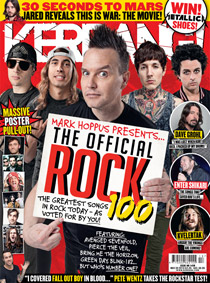 | ||||||||||||||||||||||||
| Kerrang Magazine is quite a tricky one because it could fall under both a niche media text & a mainstream media text. The reason for this being mainstream is because Rock music is a still a very popular music genre spread across both genders and all ages, however, there are certain people who dislike rock music, so they wont buy this magazine, also, the majority of the elder fans of rock wont buy these magazines because they can't really personally identify with the people in the magazine as they are mostly quite young, this is what makes Kerrang Magazine a niche media text. |
 |
| The X Factor is a very mainstream media text as it is shown on ITV 1 at 8pm on a Saturday Night. ITV is a very popular channel so many people will watch, and on a Saturday Night no-one will be at work so the majority of people will be watching TV. On the show are a wide range of contestants, so everyone is able to personally identify with the people on the show. This also gives off a huge amount of entertainment with things like Comedy & Drama. There is also an element of social integration, where people the next day will talk about what happened on the show, and if you didn't see it, you will feel left out. Also, ITV is a free channel to view, so this will attract even more people. |
 |
| Friends is a mainstream media text because it has numerous amounts of genres involved, like Comedy, Drama, Romance, etc. It is played on E4, quite a popular channel. The characters are both male and female so the audience will be able to personally identify with the characters. There is also once again an element of social integration. E4 is also, once again, a free channel, attracting more people. |
 |
| Big Brother is a mainstream media text because it is reality TV, so straight away people will be able to personally identify with the people in the show, also, the people picked for the show are very different, black people, gay people, etc, so straight away it will attract a much wider range of audience. Big Brother is shown on Channel 4, which is free, attracting more people. It is shown at around 9pm, 'prime time' as it is known as because it's the time the majority of people will be at home watching TV. |

Subscribe to:
Posts (Atom)